
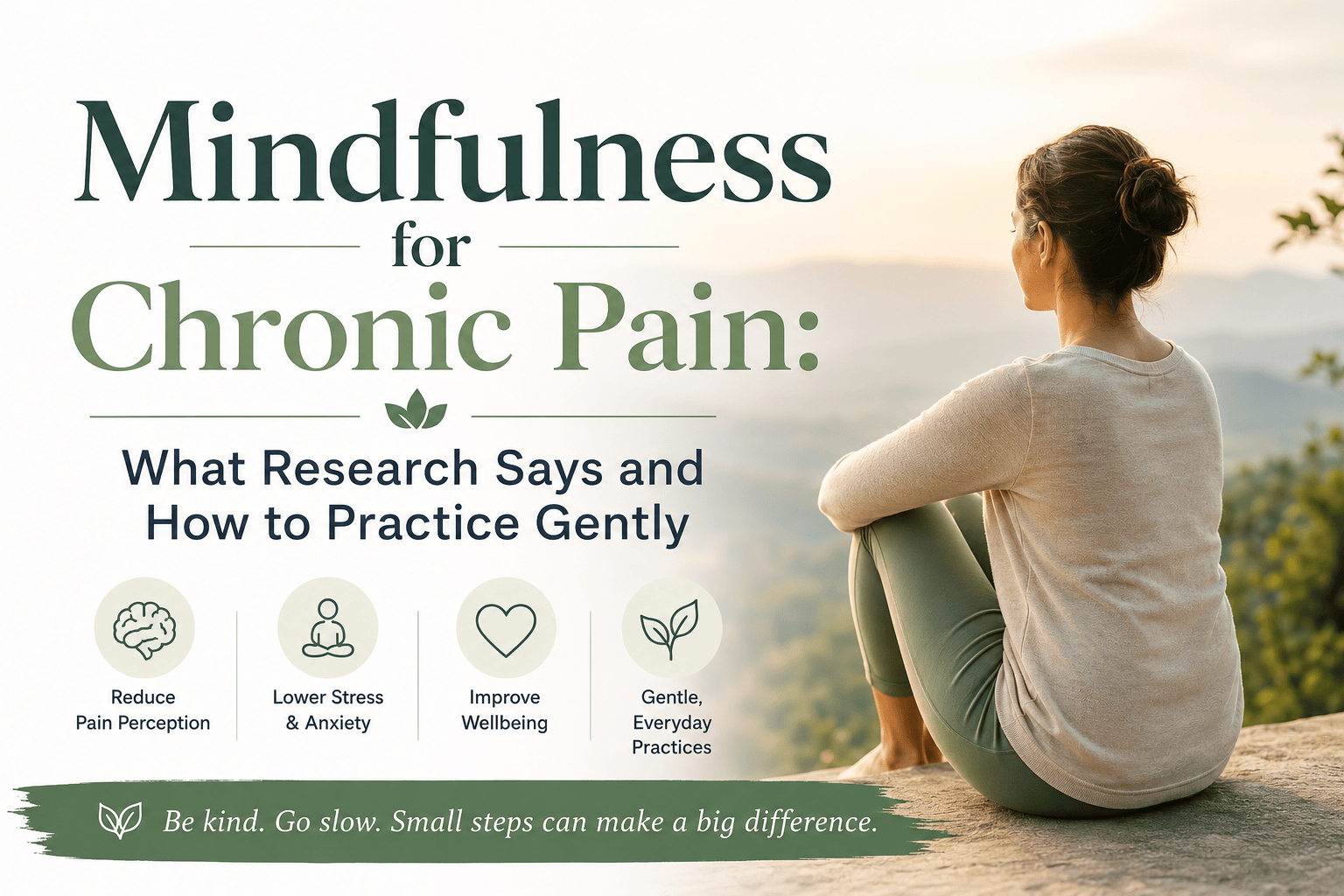
Living with chronic pain can be exhausting.
Pain is often invisible to others, yet it can shape nearly every part of life—sleep, work, relationships, movement, mood, and even one’s sense of identity. Many people with chronic pain describe feeling as though their body has become unpredictable or unsafe. Over time, the emotional burden of pain can become almost as difficult as the physical symptoms themselves.
If you are living with chronic pain, you may have come across suggestions to try mindfulness or meditation. This can sometimes feel frustrating or invalidating, especially if it sounds like someone is saying, “The pain is all in your head.”
It isn’t.
Chronic pain is real. Mindfulness does not suggest otherwise. Rather, it offers a way of relating to pain that may reduce suffering and improve quality of life.
Importantly, mindfulness is not a cure for chronic pain and should not replace medical care. However, research suggests that it may help some people cope better with pain, reduce emotional distress, and improve daily functioning.
What Is Chronic Pain?
Chronic pain is generally defined as pain that lasts for more than three months or continues beyond the expected period of healing.
Common forms of chronic pain include:
- Chronic low back pain
- Fibromyalgia
- Arthritis
- Migraines
- Neuropathic pain
- Pelvic pain conditions
- Chronic neck and shoulder pain
According to researchers, chronic pain is now considered a major public health issue because of its effects on physical health, mental wellbeing, work productivity, and quality of life (Nicholas et al., 2019).
Unlike acute pain, which acts as a warning signal after an injury, chronic pain often involves changes in the nervous system itself. Pain pathways may become more sensitive over time, meaning the brain and body can become increasingly responsive to pain signals.
This does not mean the pain is imaginary. It means that pain is complex and influenced by biological, psychological, and social factors.
Why Stress Can Make Pain Feel Worse
Many people notice that their pain becomes worse during periods of stress.
This is not a coincidence.
When we are stressed, the body activates the sympathetic nervous system, commonly known as the “fight-or-flight” response. This can lead to:
- Increased muscle tension
- Poor sleep
- Heightened alertness to bodily sensations
- Increased inflammation-related processes
- Greater emotional distress
Over time, chronic stress may increase pain sensitivity.
Pain can also create a difficult cycle:
Pain → Fear → Stress → Muscle Tension → Poor Sleep → Increased Pain
This cycle can leave people feeling trapped.
Additionally, many individuals with chronic pain experience something called pain catastrophizing. This refers to thoughts such as:
- “This will never get better.”
- “My body is broken.”
- “I won’t be able to cope.”
These thoughts are understandable. However, research suggests that catastrophizing may increase emotional suffering and pain-related disability.
What Is Mindfulness?
Mindfulness is commonly defined as paying attention to the present moment with openness and without judgment.
Jon Kabat-Zinn, who developed Mindfulness-Based Stress Reduction (MBSR), described mindfulness as:
“Paying attention in a particular way: on purpose, in the present moment, and nonjudgmentally.”
Mindfulness does not ask you to like pain or pretend it is not difficult.
Instead, it encourages gentle awareness of thoughts, emotions, and physical sensations.
Many people spend much of their day fighting pain mentally:
- “I hate this.”
- “Why is this happening?”
- “I can’t handle this.”
Again, these reactions are completely understandable.
Mindfulness simply invites us to notice these experiences with curiosity and compassion rather than automatically becoming caught in them.
Can Mindfulness Help Chronic Pain?
Research over the past two decades suggests that mindfulness-based interventions may help some people living with chronic pain.
A systematic review and meta-analysis by Hilton and colleagues (2017), which examined 38 randomized controlled trials, found that mindfulness meditation interventions were associated with:
- Small improvements in pain symptoms
- Reduced depressive symptoms
- Improved quality of life
However, the researchers also emphasized that mindfulness should not be viewed as a cure and that more high-quality research is needed.
Similarly, Bawa and colleagues (2015) concluded that mindfulness-based approaches show promise for chronic pain management, particularly in improving psychological wellbeing and coping.
One important point is that mindfulness often appears to change a person’s relationship with pain rather than eliminating pain itself.
Many people report experiences such as:
- Feeling less overwhelmed by pain
- Being less fearful of symptoms
- Having more moments of enjoyment despite pain
- Feeling more emotionally resilient
These changes can be meaningful, even when pain itself remains present.
How Might Mindfulness Help?
1. Reducing Emotional Amplification
Pain is rarely just pain.
It is often accompanied by:
- Fear
- Anger
- Frustration
- Grief
- Helplessness
Mindfulness may help create some space between physical sensations and emotional reactions.
For example:
Instead of:
“This pain means my life is ruined.”
Mindfulness encourages:
“I notice pain is present right now, and I also notice fear and sadness.”
This small shift can reduce suffering.
2. Reducing Catastrophizing
Research suggests that mindfulness may help decrease repetitive negative thinking patterns.
This does not mean becoming unrealistically positive.
It means learning to notice difficult thoughts without automatically believing every thought the mind produces.
3. Improving Nervous System Regulation
Chronic pain often keeps the nervous system in a prolonged state of threat.
Gentle mindfulness practices may help activate the parasympathetic nervous system—the body’s “rest and restore” state.
This can support:
- Relaxation
- Improved sleep
- Emotional regulation
- Reduced muscle tension
When Mindfulness Feels Difficult
Mindfulness is not easy for everyone.
Some people find that focusing on their body initially makes pain feel more intense.
Others may notice feelings of grief, fear, or frustration emerging.
This does not mean you are doing it wrong.
If body-focused practices feel overwhelming, you might try:
- Listening to sounds around you
- Looking at nature mindfully
- Gentle walking meditation
- Holding a comforting object while breathing slowly
- Practicing for only one or two minutes at a time
People with trauma histories may especially benefit from trauma-informed mindfulness approaches.
Mindfulness should always feel invitational rather than forced.
Gentle Mindfulness Practices for Chronic Pain
1. Three-Minute Breathing Space
Pause.
Notice:
- What thoughts are present?
- What emotions are present?
- What sensations are present?
Then gently bring attention to the breath.
No need to change anything.
Simply notice.
2. Compassionate Breathing
Place a hand on your chest.
As you breathe, silently say:
“This is difficult.”
“May I be kind to myself.”
People living with chronic pain often blame themselves for their limitations.
Self-compassion can be an important part of healing emotionally.
3. Mindful Movement
For some individuals, gentle stretching, walking, or physiotherapy exercises can become mindfulness practices.
The focus is not performance.
The focus is awareness.
4. Pleasant Moments Practice
Chronic pain understandably pulls attention toward suffering.
Try noticing small pleasant experiences:
- Warm sunlight
- A cup of tea
- Music
- A pet resting nearby
- A moment of laughter
This is not ignoring pain.
It is helping the brain remember that pain is not the entirety of life.
A Gentle Daily Routine
Morning:
2–3 minutes of mindful breathing.
Afternoon:
Pause and check in with your body and emotions.
Evening:
Write down one thing that brought comfort today, however small.
Consistency matters more than duration.
Even short practices may become meaningful over time.
When Mindfulness Is Not Enough
Mindfulness is one tool among many.
Please seek medical advice if you experience:
- Sudden severe pain
- New weakness or numbness
- Loss of bladder or bowel control
- Fever with pain
- Unexplained weight loss
- Significant worsening of symptoms
Chronic pain often benefits from a multidisciplinary approach that may include:
- Medical treatment
- Physiotherapy
- Psychological support
- Sleep management
- Lifestyle interventions
- Mindfulness practices
There is no shame in needing multiple forms of support.
Final Thoughts
Living with chronic pain can be lonely and exhausting.
Mindfulness cannot promise a pain-free life.
What it may offer, however, is the possibility of meeting pain with a little less fear, a little more kindness, and perhaps more moments of peace amid difficult circumstances.
Progress is rarely linear.
Some days will feel harder than others.
On those days, mindfulness may simply look like placing a hand on your heart and reminding yourself:
“I am doing the best I can today.”
That, too, is a form of healing.
References
- Hilton L, Hempel S, Ewing BA, et al. (2017). Mindfulness Meditation for Chronic Pain: Systematic Review and Meta-analysis. Annals of Behavioral Medicine, 51(2), 199–213.
- Bawa FLM, Mercer SW, Atherton RJ, et al. (2015). Does mindfulness improve outcomes in patients with chronic pain? Systematic review and meta-analysis. British Journal of General Practice, 65(635), e387–e400.
- Nicholas M, Vlaeyen JWS, Rief W, et al. (2019). The IASP classification of chronic pain for ICD-11: chronic primary pain. Pain, 160(1), 28–37.
- Kabat-Zinn J. (1982). An outpatient program in behavioral medicine for chronic pain patients based on the practice of mindfulness meditation. General Hospital Psychiatry, 4(1), 33–47.
- Garland EL, Brintz CE, Hanley AW, et al. (2019). Mind-body therapies for opioid-treated pain. JAMA Internal Medicine, 179(1), 91–99.
Leave a Reply