
Digestive symptoms can be frustrating, uncomfortable, and at times, overwhelming.
Perhaps you struggle with bloating, abdominal discomfort, indigestion, changes in bowel habits, or a general feeling that your digestive system becomes worse during stressful periods.
Many people notice patterns such as:
- “My stomach acts up when I’m anxious.”
- “Stress always seems to affect my digestion.”
- “I feel nervous, and suddenly my stomach feels unsettled.”
If this sounds familiar, you are not imagining it.
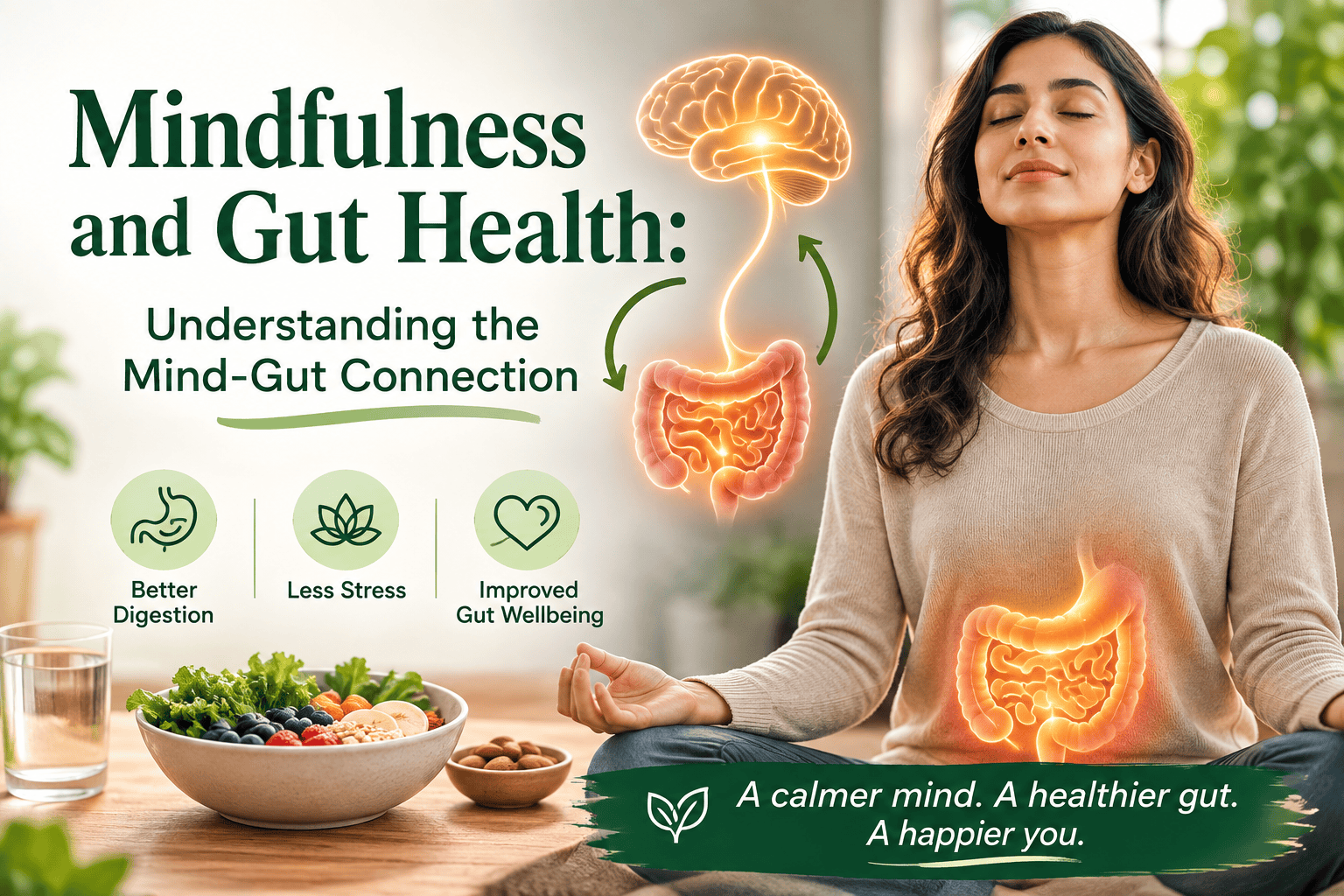
Researchers increasingly recognize that the brain and digestive system are deeply interconnected.
This relationship is often referred to as the gut-brain axis.
Because of this connection, many people wonder:
Can mindfulness and meditation improve gut health?
It is important to answer this question carefully.
Mindfulness is not a treatment for digestive diseases and should never replace medical care.
However, research suggests that mindfulness practices may help some individuals better manage stress, improve emotional wellbeing, and support conditions in which stress appears to influence digestive symptoms.
What Is Gut Health?
The term “gut health” generally refers to the functioning and wellbeing of the digestive system.
This may include:
- Digestion and nutrient absorption
- Healthy bowel habits
- Gut barrier function
- The balance of microorganisms living in the digestive tract (gut microbiota)
- The relationship between the gut and the nervous system
Gut health is influenced by many factors, including:
- Genetics
- Nutrition
- Sleep
- Medications
- Illness
- Physical activity
- Stress
Because so many factors are involved, there is rarely a single explanation for digestive symptoms.
Understanding the Gut-Brain Axis
The digestive system and the brain communicate continuously.
This communication occurs through several pathways, including:
- The nervous system, particularly the vagus nerve
- Hormonal pathways
- Immune pathways
- Signals involving the gut microbiome
This means that emotional experiences can sometimes influence digestive symptoms.
Similarly, ongoing digestive symptoms may affect mood, stress, and quality of life.
This creates a two-way relationship.
For some individuals, the cycle may look like this:
Stress → Digestive symptoms → More worry → More symptoms
This can become exhausting.
Can Stress Affect Digestion?
Research suggests that stress may influence digestive functioning in several ways.
Periods of prolonged stress may affect:
- Appetite
- Gut motility
- Pain sensitivity
- Sleep quality
- Attention toward bodily sensations
Many people notice increased symptoms during:
- Work stress
- Major life changes
- Exams
- Relationship difficulties
- Periods of anxiety
This does not mean symptoms are “all in your head.”
Digestive symptoms are real.
Rather, it highlights how closely emotional and physical health are connected.
What Is Mindfulness?
Mindfulness involves paying attention to the present moment with openness and curiosity.
It means noticing thoughts, emotions, and bodily sensations without immediately judging them.
Mindfulness is not about pretending discomfort does not exist.
Instead, it encourages a gentler relationship with difficult experiences.
For example, instead of automatically thinking:
“Something is seriously wrong because my stomach hurts.”
Mindfulness may invite:
“I notice discomfort and anxiety are present right now.”
This small shift may help reduce emotional distress.
Can Mindfulness Improve Gut Health?
This is where the evidence becomes more nuanced.
Research does not currently support claims such as:
“Meditation heals the gut.”
or
“Mindfulness fixes digestive problems.”
However, studies suggest that mindfulness interventions may improve:
- Stress management
- Quality of life
- Emotional wellbeing
- Symptom-related distress in certain gastrointestinal conditions
Researchers have been particularly interested in conditions involving disorders of gut-brain interaction, such as Irritable Bowel Syndrome (IBS).
How Might Mindfulness Support Digestive Wellbeing?
1. Reducing Stress Reactivity
Chronic stress can affect emotional and physical wellbeing.
Mindfulness may help individuals become less reactive to stressful experiences.
2. Reducing Hypervigilance Toward Symptoms
Many people with digestive concerns become highly aware of every bodily sensation.
This is understandable.
When symptoms are unpredictable, the body can begin to feel unsafe.
Mindfulness may help people notice sensations without becoming completely overwhelmed by them.
3. Supporting Better Sleep
Sleep and digestive wellbeing are closely connected.
Poor sleep may worsen emotional distress and symptom perception.
Mindfulness practices may improve sleep quality in some individuals.
4. Improving Emotional Wellbeing
Living with chronic digestive symptoms can be emotionally exhausting.
Mindfulness may help support:
- Self-compassion
- Emotional resilience
- Greater acceptance of uncertainty
Mindfulness and the Gut Microbiome
The gut microbiome refers to the trillions of microorganisms living within the digestive system.
Researchers are increasingly studying relationships between:
- Stress
- The gut microbiome
- Immune functioning
- Overall health
However, it is important to be cautious.
At present, there is insufficient evidence to conclude that meditation directly changes the gut microbiome in clinically meaningful ways.
This remains an exciting area for future research.
Living With Digestive Symptoms
Digestive conditions can affect many aspects of life.
Some individuals may:
- Avoid social situations
- Worry about food
- Feel embarrassed about symptoms
- Experience anxiety around travel or leaving home
These emotional experiences deserve compassion.
Mindfulness may help people respond more gently to themselves during difficult moments.
A Gentle Mindfulness Practice
Three-Minute Breathing Exercise
Sit comfortably.
Notice your breathing.
There is no need to change it.
Simply observe:
- Air entering the body
- The rise and fall of the chest
- The feeling of exhaling
If thoughts arise, gently return your attention to the breath.
The goal is not to stop thinking.
The goal is simply awareness.
Self-Compassion Practice
Place a hand on your chest and silently repeat:
This is difficult.
Many people struggle with invisible symptoms.
May I respond to myself with kindness today.
Living with chronic symptoms can be exhausting.
Compassion matters.
Mindful Eating Practice
Before eating, pause and ask:
- How hungry am I?
- How am I feeling emotionally?
- What does my body need right now?
This is not about eating perfectly.
It is simply an invitation to pay attention.
When Mindfulness May Feel Difficult
Mindfulness can sometimes increase awareness of discomfort.
Some individuals may notice:
- Frustration
- Fear
- Sadness
- Anger
This is normal.
You do not need to force yourself.
Even one mindful breath can be enough.
When to Seek Medical Evaluation
Please seek medical care if you experience:
- Unexplained weight loss
- Rectal bleeding
- Persistent vomiting
- Fever
- Severe pain
- New symptoms after age 50
- Symptoms that significantly affect daily functioning
Digestive symptoms deserve proper medical assessment.
Mindfulness should never delay medical evaluation.
A Gentle Daily Routine
Morning:
Three minutes of mindful breathing.
Afternoon:
A short mindful walk.
Evening:
Five minutes of gratitude or self-compassion practice.
Consistency matters more than perfection.
Final Thoughts
The relationship between the mind and the gut is complex and fascinating.
Current research suggests that mindfulness may support emotional wellbeing and help some individuals cope more effectively with stress-related digestive symptoms.
However, meditation is not a cure for digestive conditions.
Perhaps its greatest value lies elsewhere.
Living with chronic digestive symptoms can be emotionally exhausting.
Mindfulness may offer:
- Greater emotional resilience
- More self-compassion
- Reduced stress
- A gentler relationship with your body
You do not need to handle everything perfectly.
Sometimes healing begins with something much smaller:
Pausing.
Taking a breath.
And reminding yourself:
My body has been carrying a lot, and I deserve kindness while caring for it.
That, too, is meaningful.
Medical Disclaimer
This article is for educational purposes only and should not be considered medical advice. Mindfulness and meditation are complementary practices and should not replace professional medical care, diagnosis, or treatment.
References
- Mayer EA. The Mind-Gut Connection. Harper Wave. 2016.
- Drossman DA. Functional Gastrointestinal Disorders: History, Pathophysiology, Clinical Features and Rome IV. Gastroenterology. 2016.
- Carabotti M, Scirocco A, Maselli MA, Severi C. The Gut-Brain Axis: Interactions Between Enteric Microbiota, Central and Enteric Nervous Systems. Annals of Gastroenterology. 2015.
- Zernicke KA, Campbell TS, Blustein PK, et al. Mindfulness-Based Stress Reduction for the Treatment of Irritable Bowel Syndrome Symptoms: A Randomized Controlled Trial. International Journal of Behavioral Medicine. 2013.
- Cryan JF, O’Riordan KJ, Cowan CSM, et al. The Microbiota-Gut-Brain Axis. Physiological Reviews. 2019.
- Keefer L, Palsson OS, Pandolfino JE. Best Practice Update: Incorporating Psychogastroenterology Into Management of Digestive Disorders. Gastroenterology. 2018.
- Chey WD, Kurlander J, Eswaran S. Irritable Bowel Syndrome: A Clinical Review. JAMA. 2015.
Leave a Reply