
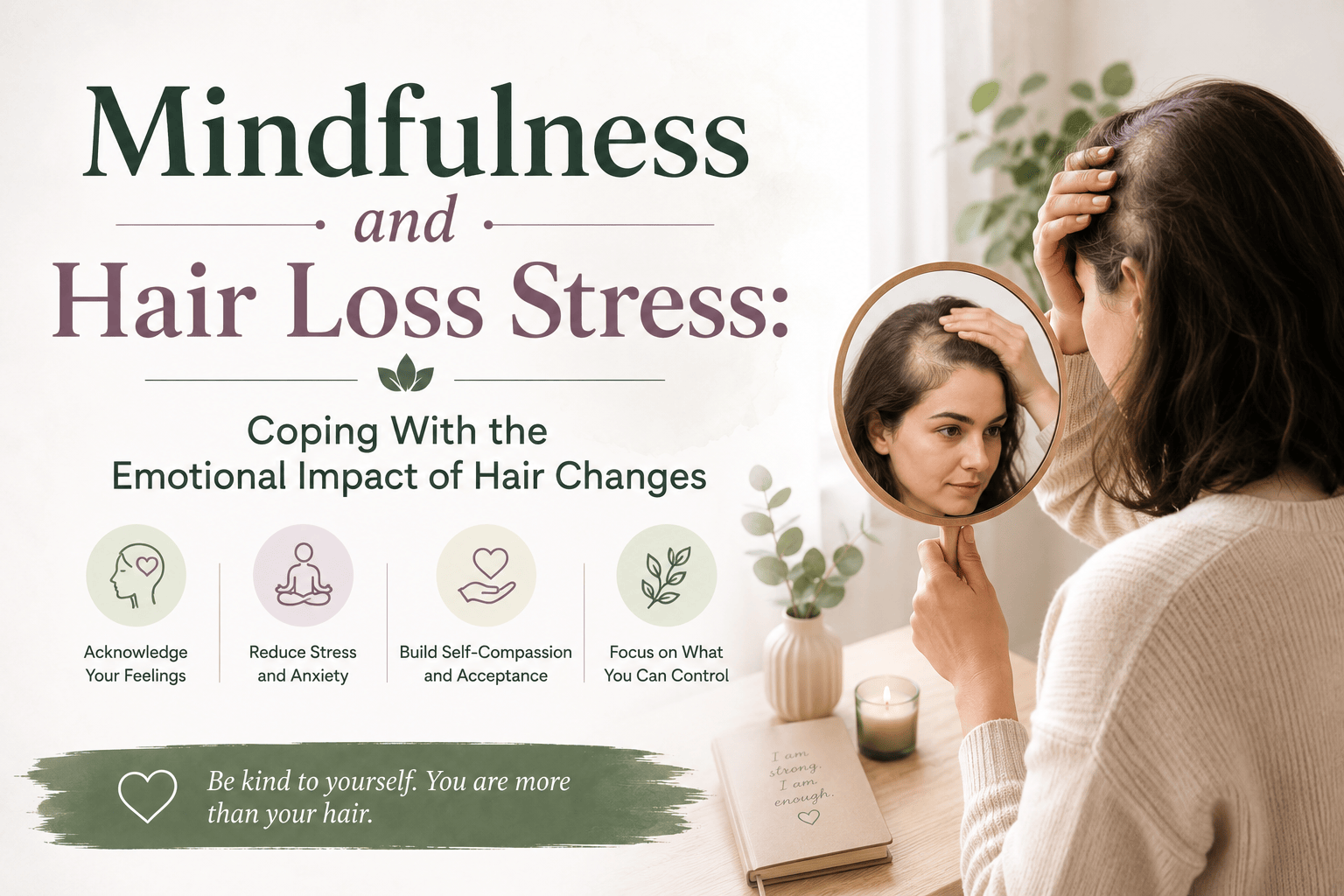
Hair loss can be far more emotionally difficult than many people realize.
For some people, it begins gradually. You may notice more hair in the shower, increased shedding while brushing, or a widening part line. For others, hair loss may occur more suddenly after periods of illness, significant stress, hormonal changes, or medical conditions.
Whatever the cause, hair loss can affect much more than appearance.
It can affect confidence, self-esteem, identity, relationships, and emotional wellbeing.
Many people living with hair loss describe feelings such as:
- Fear about future hair loss
- Embarrassment or self-consciousness
- Frustration that others do not understand
- Anxiety about social situations
- Grief for how they used to look
If this sounds familiar, you are not alone.
Researchers have increasingly become interested in the relationship between stress and hair health, as well as how mindfulness may help people cope with the emotional burden associated with hair loss.
It is important to state this clearly:
Mindfulness is not a treatment for hair loss and should never replace medical evaluation or evidence-based treatment.
However, mindfulness may help some individuals reduce stress, improve emotional wellbeing, and develop a gentler relationship with themselves during a difficult experience.
Understanding Hair Loss
Hair loss can occur for many different reasons.
Common causes include:
- Androgenetic alopecia (pattern hair loss)
- Telogen effluvium (stress-related shedding)
- Alopecia areata
- Nutritional deficiencies
- Hormonal conditions such as PCOS or thyroid disorders
- Certain medications
- Illness, surgery, or significant physical stress
- Aging
Because there are many possible causes, it is important to seek medical evaluation if you are experiencing significant hair loss.
The Emotional Impact of Hair Loss
Hair is closely tied to identity and self-image in many cultures.
For some people, hair loss may feel like losing a part of themselves.
Common emotional experiences include:
- Sadness
- Anxiety
- Shame
- Anger
- Social withdrawal
- Loss of confidence
Some individuals may begin:
- Avoiding photographs
- Changing hairstyles to hide thinning
- Frequently checking mirrors
- Constantly comparing themselves to others
Over time, this can become emotionally exhausting.
Can Stress Affect Hair Loss?
Researchers have long been interested in the relationship between stress and hair health.
Stress does not cause every type of hair loss.
However, significant physical or emotional stress has been associated with conditions such as telogen effluvium, in which a larger number of hair follicles enter the shedding phase.
Stress may also affect:
- Sleep quality
- Eating habits
- Hormonal balance
- Overall wellbeing
For many individuals, this creates a difficult cycle:
Stress → Hair shedding → Increased worry → More stress
This cycle can feel overwhelming.
What Is Mindfulness?
Mindfulness involves paying attention to the present moment with openness and curiosity.
It means noticing thoughts, emotions, and physical sensations without immediately judging them.
Mindfulness is not about pretending that hair loss is unimportant.
Hair loss can be deeply distressing.
Rather, mindfulness encourages a gentler relationship with difficult experiences.
For example, instead of automatically thinking:
“I will never feel confident again.”
Mindfulness may invite:
“I notice fear and sadness are present right now.”
This small shift may reduce emotional suffering.
Can Mindfulness Help People Living With Hair Loss?
Research specifically examining mindfulness and hair loss remains limited.
However, studies suggest that mindfulness-based interventions may improve:
- Stress management
- Anxiety symptoms
- Body image concerns
- Self-compassion
- Quality of life in people living with chronic health conditions
This distinction is important.
Mindfulness may not directly regrow hair.
However, it may help individuals cope with the emotional burden of hair changes.
Hair Loss and Self-Esteem
Many people tie their sense of attractiveness or identity to their hair.
Hair loss may lead to thoughts such as:
- “I don’t recognize myself anymore.”
- “People are staring at me.”
- “I feel less attractive.”
These thoughts can be painful.
Mindfulness encourages noticing these experiences with kindness rather than self-judgment.
The goal is not to force positivity.
The goal is to reduce unnecessary suffering.
The Role of Self-Compassion
People experiencing hair loss are often much harder on themselves than they would be toward someone else.
Imagine a friend saying:
“I feel ugly because my hair is thinning.”
Most people would respond with kindness.
Yet many individuals speak to themselves much more harshly.
Research suggests that self-compassion may support emotional resilience and psychological wellbeing.
Self-compassion does not mean you have to like what is happening.
It simply means acknowledging:
This is difficult, and I deserve kindness while going through it.
How Might Mindfulness Help?
1. Reducing Stress Reactivity
Mindfulness may help people become less overwhelmed by stressful experiences.
Because stress itself can worsen emotional wellbeing, reducing stress may be meaningful.
2. Reducing Appearance-Related Rumination
Many people find themselves repeatedly thinking about:
- How much hair they have lost
- Whether others have noticed
- What the future might look like
This constant mental focus can become exhausting.
Mindfulness may help people notice these thoughts without becoming completely consumed by them.
3. Improving Emotional Regulation
Hair loss often brings grief.
Mindfulness may help individuals create space for difficult emotions without immediately fighting them.
4. Supporting Better Sleep and Self-Care
Stress related to appearance changes may affect sleep and self-care behaviors.
Mindfulness practices may support overall wellbeing.
When Mindfulness May Feel Difficult
Mindfulness can sometimes increase awareness of painful emotions.
Some individuals may notice:
- Sadness
- Grief
- Anger
- Fear
- Shame
This is normal.
You do not need to force yourself.
Even one mindful breath can be enough.
Gentle Mindfulness Practices for Hair Loss Stress
Three-Minute Breathing Exercise
Sit comfortably.
Notice your breathing.
There is no need to change it.
Simply observe:
- Air moving in and out
- The rise and fall of your chest
- The sensation of exhaling
If thoughts arise, gently return your attention to the breath.
The goal is not to stop thinking.
The goal is simply awareness.
Self-Compassion Practice
Place a hand on your chest and silently repeat:
This is difficult.
Many people struggle with appearance changes.
May I respond to myself with kindness today.
Mirror Mindfulness Exercise
Stand in front of a mirror.
Notice any thoughts or emotions that arise.
Rather than immediately criticizing yourself, gently say:
I am more than my hair.
This practice may initially feel uncomfortable.
That is okay.
Go slowly.
When to Seek Medical Evaluation
Please seek medical assessment if you experience:
- Sudden or severe hair shedding
- Patchy hair loss
- Scalp pain or inflammation
- Hair loss associated with other symptoms
- Significant distress affecting daily life
A healthcare professional can help identify possible underlying causes.
A Gentle Daily Routine
Morning:
Three minutes of mindful breathing.
Afternoon:
A short mindful walk.
Evening:
Write down one thing your body allowed you to do today.
Over time, these small practices may become meaningful.
Final Thoughts
Hair loss can be emotionally painful.
It may affect confidence, identity, and the way you see yourself.
Mindfulness does not promise to stop hair loss or regrow hair.
What it may offer instead is:
- Reduced stress
- Greater self-compassion
- Less self-criticism
- A gentler relationship with yourself
You do not need to pretend this experience is easy.
You do not need to force yourself to feel positive.
Sometimes healing begins with something much smaller:
Taking a breath.
Acknowledging your pain.
And reminding yourself:
I am still worthy of kindness, care, and compassion.
That, too, is meaningful.
Medical Disclaimer
This article is for educational purposes only and should not be considered medical advice. Mindfulness is a complementary practice and should not replace professional medical evaluation, diagnosis, or treatment.
References
- Asghar F, Shamim N, Farooque U, Sheikh H, Aqeel R. Telogen Effluvium: A Review of the Literature. Cureus. 2020.
- Rossi A, Muscianese M, Piraccini BM, et al. Italian Guidelines in Diagnosis and Treatment of Alopecia Areata. Giornale Italiano di Dermatologia e Venereologia. 2019.
- Pratt CH, King LE Jr, Messenger AG, Christiano AM, Sundberg JP. Alopecia Areata. Nature Reviews Disease Primers. 2017.
- Hunt N, McHale S. The Psychological Impact of Alopecia. BMJ. 2005.
- Cartwright T, Endean N, Porter A. Illness Perceptions, Coping and Quality of Life in Patients With Alopecia. British Journal of Dermatology. 2009.
- Malkud S. Telogen Effluvium: A Review. Journal of Clinical and Diagnostic Research. 2015.
Leave a Reply